
AH50 Complement Test: Alternative Pathway Activity, Low Levels, and Immune Function

The AH50 complement test measures whether the alternative complement pathway can complete its immune-defense cascade. This pathway is part of the innate immune system,...
C1 Esterase Inhibitor Antigen Test: Hereditary Angioedema, Low Levels, and Diagnosis

The C1 esterase inhibitor antigen test measures how much C1 inhibitor protein is present in the blood. It is a central test for hereditary...
C1 Esterase Inhibitor Function Test: Hereditary Angioedema, Functional Deficiency, and Diagnosis

The C1 esterase inhibitor function test checks whether C1 inhibitor protein can control the enzyme systems that generate bradykinin. It is the most direct...
CH50 Complement Test: Total Complement Activity, High and Low Levels, and Immune Function

The CH50 complement test measures whether the classical and terminal complement pathways can work together to destroy a target. It is a functional screening...
Common Variable Immunodeficiency Test Panel: IgG, IgA, IgM, Vaccine Response, and Diagnosis

A common variable immunodeficiency test panel evaluates whether the body makes enough antibodies and whether those antibodies respond normally to vaccines. The core findings...
Complement and Immunoglobulin Blood Test Panel: C3, C4, CH50, IgG, IgA, IgM, and Immune Function

A complement and immunoglobulin blood test panel examines two different parts of immune defense. C3, C4, and CH50 assess complement proteins that tag microbes,...
Complement C1q Test: Low Levels, Immune Complex Disease, and Lupus Nephritis Risk
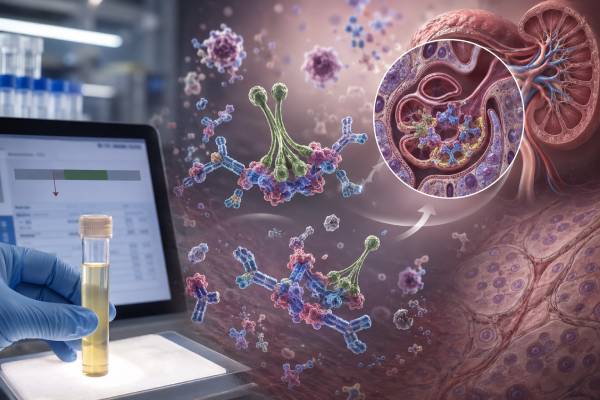
The complement C1q test measures the amount—or, in some laboratories, the function—of C1q, the recognition protein that starts the classical complement pathway. C1q helps...
Complement C3 Test: High, Low, Normal Range, Autoimmune Disease, and Immune Meaning

A complement C3 test measures the concentration of complement component 3, a protein at the center of the classical, lectin, and alternative complement pathways....
Complement C4 Test: High, Low, Normal Range, Autoimmune Disease, and Immune Meaning

The complement C4 test measures the blood concentration of complement component 4, a protein used early in the classical and lectin complement pathways. C4...
Complement C5 Test: Terminal Complement Pathway and Deficiency Risk

A complement C5 test evaluates the amount or function of complement component 5, the protein that connects upstream complement activation with two major outcomes:...
Complement C6 Test: Complement Deficiency and Infection Risk

The complement C6 test evaluates whether complement component 6 can perform its role in the membrane attack complex, the terminal structure that helps the...
Complement C7 Test: Complement Deficiency and Infection Risk

The complement C7 test assesses the function of complement component 7, one of the proteins that turns C5b-6 into a membrane-bound terminal complement complex....
Complement C8 Test: Complement Deficiency and Infection Risk
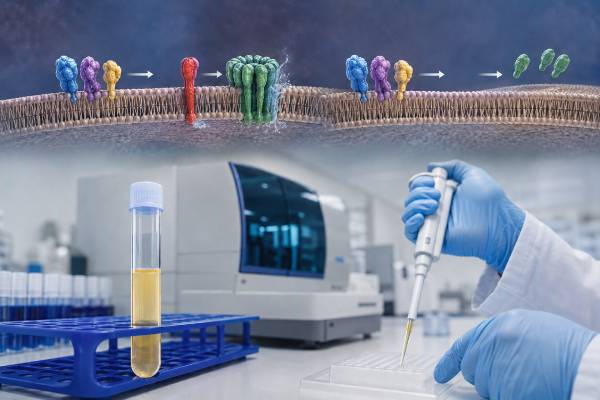
A complement C8 test evaluates the activity of complement component 8, a three-chain protein that penetrates a target membrane during formation of the membrane...
Complement C9 Test: Complement Deficiency and Infection Risk

The complement C9 test evaluates the function of complement component 9, the final protein added to the membrane attack complex. Multiple C9 molecules normally...
Complement Factor B Test: Alternative Pathway Function and Complement Deficiency

A complement Factor B test examines a protein that is indispensable to the alternative complement pathway—the immune system’s continuously available amplification circuit. The result...
Complement Factor H Test: Complement Regulation, Kidney Disease, and Meaning

A complement Factor H test evaluates one of the alternative pathway’s most important protective regulators. Factor H circulates in blood, recognizes C3b, accelerates breakdown...
Diphtheria Antibody Test: Vaccine Immunity, Protection Level, and Immune Response

A diphtheria antibody test measures IgG directed against diphtheria toxoid, the inactivated toxin used in DTaP, Tdap, and Td vaccines. It is most useful...
Free Light Chain Test: Kappa, Lambda, Ratio, and Plasma Cell Disorders

A serum free light chain test reports three linked results: free kappa, free lambda, and the kappa-to-lambda ratio. Plasma cells normally make complete immunoglobulins...
IgA Blood Test: High, Low, Normal Range, Mucosal Immunity, and Celiac Disease

An IgA blood test measures immunoglobulin A, an antibody that helps protect the body’s moist surfaces, including the airways, digestive tract, eyes, and mouth....
IgE Blood Test: High, Low, Allergy, Asthma, Parasites, and Meaning

An IgE blood test measures immunoglobulin E, the antibody class most closely linked with immediate allergic reactions and defense against certain parasites. Doctors may...